Choosing resin
Resin bound vs resin bonded
The names are similar, but the materials are combined differently and the finished surfaces do not perform in the same way.
The short answer
Bound is mixed. Bonded is scattered.
With resin bound surfacing, dried aggregate and resin are mixed together before the material is hand-trowelled onto the prepared base. With resin bonded surfacing, resin is applied to the base first and aggregate is scattered over it.
That difference changes the texture, permeability and way the stone is held. Resin bound produces a smoother, more even finish. Resin bonded produces a rougher surface that is intended to resemble loose gravel.
The terms are often used interchangeably in quotations and online listings. They should not be. Homeowners need to know which system is being proposed because they are installed differently and require different drainage considerations.
See the difference
Compare the surface texture
Use closely matched photographs taken from the same height and in the same light. The images need to show the aggregate and finish, not only the wider property.
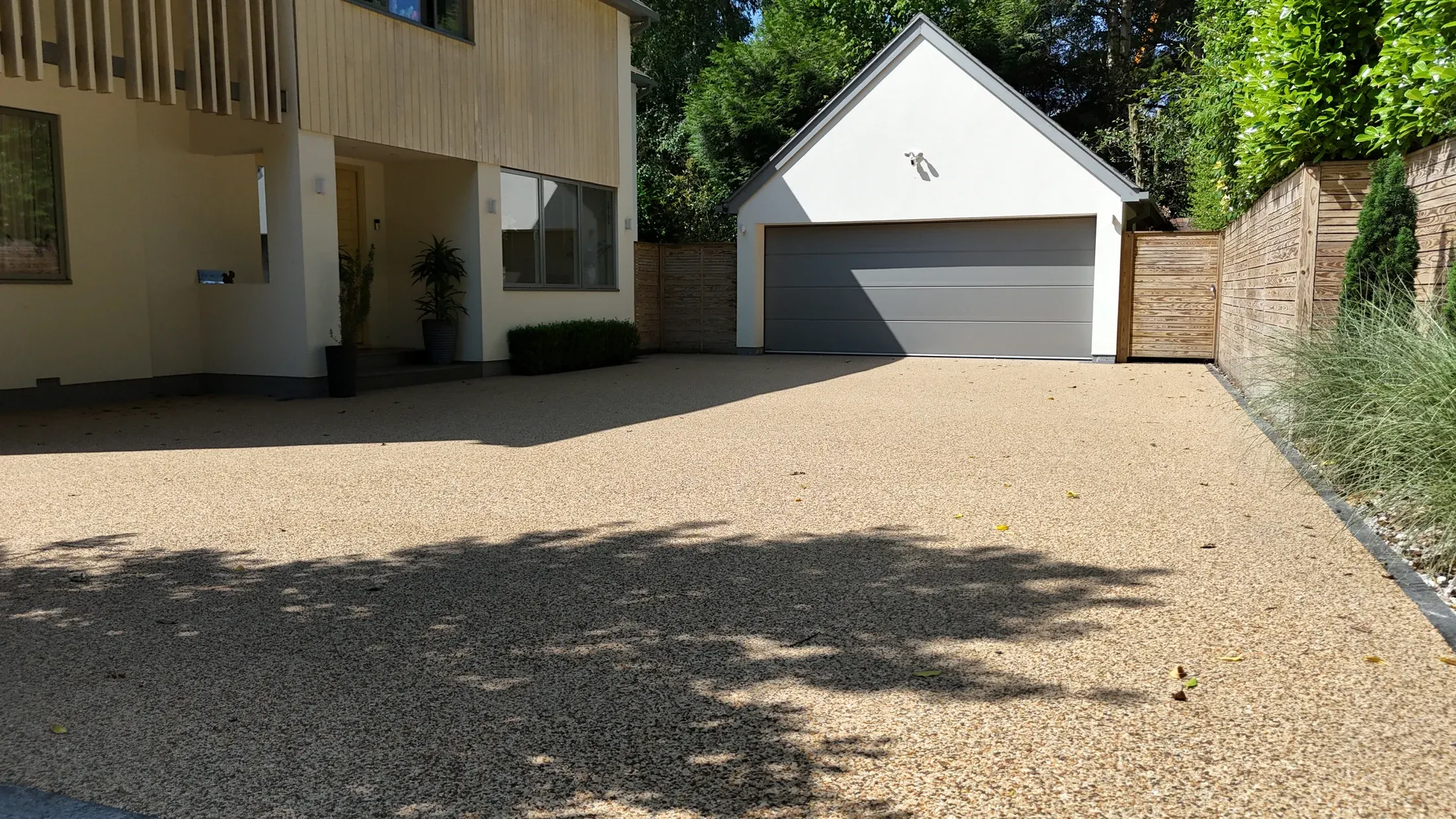
Side by side
Compare side by side
This comparison describes the general characteristics of the two systems. Product specifications and site requirements still need to be checked for a particular project.
Dried aggregate and resin are mixed together before laying.
Resin is spread onto the base and aggregate is scattered over it.
Smooth, even and hand-trowelled, with the stone held throughout the layer.
More textured, with exposed stone creating a loose-gravel appearance.
The surface contains connected voids that allow water through.
The resin layer beneath the stone forms an impermeable surface.
Only functions as a fully permeable system when the base and drainage design support it.
Water must be managed across or away from the surface.
The aggregate is coated and held within the mixed layer.
Some exposed or excess aggregate can remain loose at the surface.
A consistent stone surface with a flatter profile.
A rougher, more traditional scattered-stone texture.
The installation method
How each surface is made
In a resin bound mix, the resin coats the dried aggregate before the material is spread and trowelled. Small connected voids remain between the stones, allowing water to pass through the surface.
In a resin bonded system, the continuous resin layer is already on the base before the stone is added. That layer prevents water passing vertically through the finished surface.
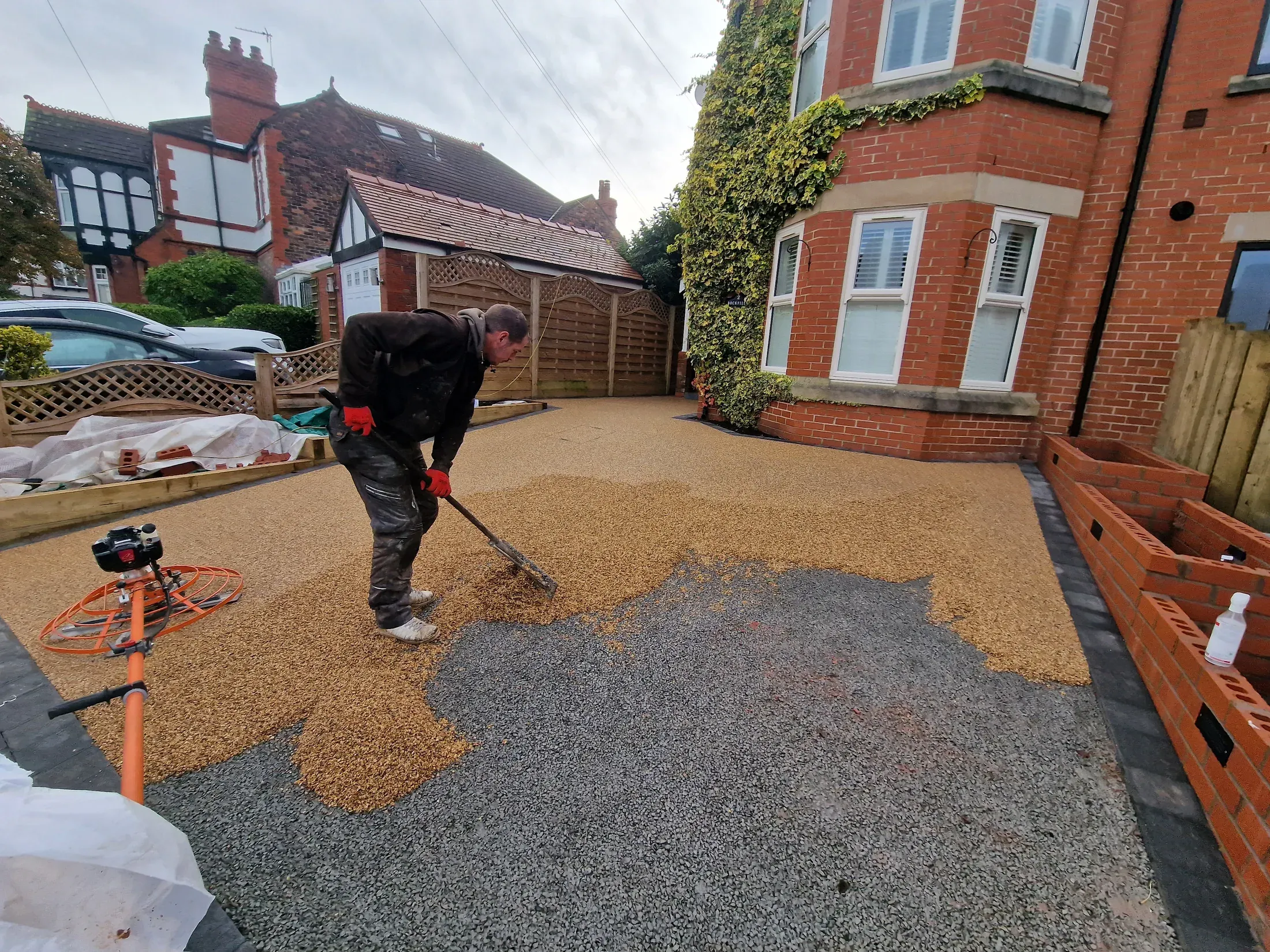
Choosing for a driveway
Choosing for your driveway
Resin bound is commonly chosen for domestic driveways because it creates a smooth finish and can form part of a permeable paving system. The word “permeable” must apply to the complete design, not only the decorative layer. Water passing through the resin still needs a suitable base or another designed route.
Resin bonded provides a more heavily textured, scattered-stone appearance. Because the surface is impermeable, its falls and drainage must handle water in the same way as another non-porous finish.
The right answer depends on the property, the intended use, the existing base and the appearance required. Cheshire Design focuses on resin bound surfacing and confirms the proposed base and drainage after inspecting the site.
A useful planning distinction
Why the base matters
Government guidance allows for permeable front-garden surfacing or for water to drain naturally to a lawn, border or other suitable area. The most appropriate construction depends on the site, slopes, soil and existing drainage.
Identifying an existing surface
How to tell them apart
Look at the texture
Resin bound is normally smoother and more even. Resin bonded has exposed, angular stone and a rougher profile.
Check for loose stone
A bonded finish can retain loose or exposed aggregate at the surface. Bound stone is coated within the mixed layer.
Check the drainage
Water should pass through a clean resin bound surface. It will run across resin bonded surfacing according to the falls.
Common questions
Questions and answers
Is resin bound the same as resin bonded?
No. Resin bound mixes the stone and resin together before laying. Resin bonded spreads resin onto the base first and then scatters stone over the wet resin.
Which system is permeable?
Resin bound allows water through its surface. To create a fully permeable driveway, the layers beneath it and the drainage design must also allow that water to be managed correctly. Resin bonded is not a permeable surface.
Which finish has loose stone?
Resin bound aggregate is coated and held within the mixed layer. Resin bonded is designed to look more like loose gravel, and some exposed or excess stone can remain at the surface.
Can I tell them apart by looking?
Usually. Resin bound tends to look smoother and more consistent. Resin bonded has a rougher texture because the stone is scattered over resin rather than mixed through it.
Which system does Cheshire Design focus on?
Cheshire Design focuses on resin bound surfacing for driveways, patios, paths and related applications.
Technical information reviewed 20 August 2026 against manufacturer guidance and current government guidance on permeable front-garden surfacing.